Bleaching rarely announces itself. It creeps in as a faint paleness on the tips of a staghorn colony, a patch of white that looks like sunlight on the reef, a colour you half-notice and then swim past. Snorkellers are often the first people to see it, because you hover right above the corals at the depth where change shows up first. Learning to read those early signals takes a little practice, and it turns an ordinary swim into something genuinely useful. Here are ten signs worth looking for, plus honest notes on what bleaching is not, and how to pass what you see on to the people who record it.
What you are actually looking at
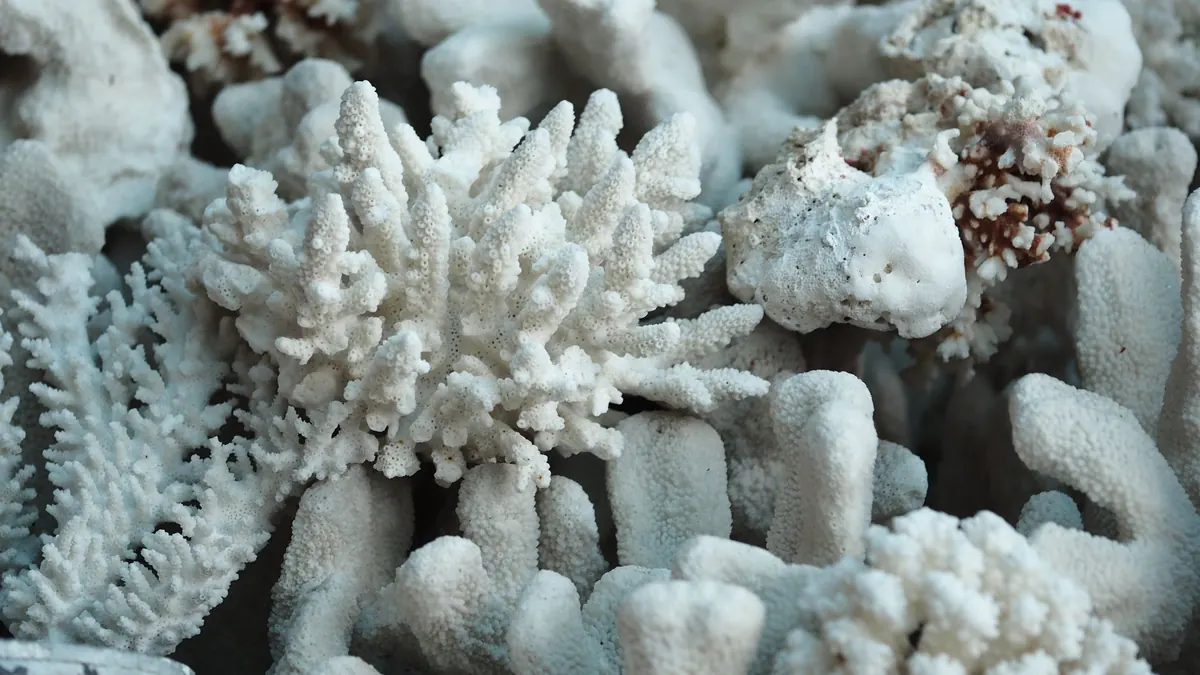
Corals get most of their colour from microscopic algae called zooxanthellae, which live inside their tissue and feed them. When water gets too warm, or a coral is stressed by sediment, pollution or unusually bright light, it can expel those algae. The tissue stays alive, but it becomes transparent, and what you see through it is the white limestone skeleton underneath.
That distinction matters. A bleached coral is not a dead coral. It is a stressed, hungry coral that can recover if conditions settle within a few weeks. Dead coral looks different again: it loses its sharp structure and is quickly covered by fuzzy algae.
The ten signs, one by one
- Pale tips on branching corals. Staghorn, elkhorn and similar species often bleach from the tips inwards. The growing points lose colour first while the base stays brown. From the surface it can look like heat haze.
- Bone-white or chalky patches. Established bleaching looks flat and matt, like unglazed pottery, with none of the soft texture of living tissue. Fresh white edges on an otherwise healthy colony deserve a photo.
- Translucent, ghost-like tissue. Hold your mask steady and look along the side of a coral. Bleached tissue looks glassy, and you can often see the skeleton's ridges, cups or branching pattern straight through it.
- An unexpected neon glow. Some corals make vivid pink, blue, purple or green pigments when they are stressed. It is beautiful, and it is not a sign of health. If a normally brown coral suddenly flares, note it.
- Mottled, patchy colour loss. Partial bleaching leaves a colony looking piebald: some branches white, some still brown; a plate with pale blotches spreading across it.
- Pale rims around darker centres. The reverse pattern happens too — a boulder coral with a bleached edge and a healthy middle, or a brain coral with pale valleys between brown ridges.
- Soft corals, anemones and giant clams fading. Bleaching is not only a hard-coral problem. If the leathery soft corals look washed out, or a clam's mantle has lost its deep blue or green, the same stress is likely at work.
- Fuzz appearing on the white. After a few days, thin green or brown algae start settling on bleached patches. It is a rough way of judging how long a coral has been pale.
- A washed-out reef from the surface. Looking down from the top, a healthy shallow reef reads as warm brown and gold. Bleaching turns the whole view grey-white, like a photograph that has lost its contrast.
- A reef that does not match your memory. Repeat visitors have an advantage. Compare a familiar colony with your own photos from last season, taken at the same depth in similar light. If the colour has changed, that is a record worth sending in.
False alarms: telling bleaching from everything else
Plenty of things make coral look paler than it is, and misreporting wastes surveyors' time. Before you log a sighting, rule these out:
- Depth and light. Red light disappears quickly underwater, so corals already look duller and bluer than they do in a photograph.
- Filters and camera settings. Red filters, colour-correction apps and auto white balance all change what a screen shows you. Trust your eyes as well as your camera.
- Natural colour variation. Some colonies are simply pale, and colour morphs within one species can vary from deep brown to lilac.
- Dappled light. Ripples focus sunlight into bright moving patches. Watch for a few seconds and the pattern will shift; bleaching does not.
- Recently dead coral. This is usually covered in green, brown or black fuzz rather than standing out as white. It is a different problem with a different timescale.
When to look harder
Bleaching tends to appear after sustained heat, so the risk is highest in shallow, sheltered and calm water: lagoons, reef flats, and the tops of bommies that sit close to the surface. Low tides on still, sunny days concentrate the stress, and heavy rain or runoff can add to it. Late summer is the classic window in most tropical regions, which is also when many people are on holiday. If you know a region has had a long calm, hot spell, treat every pale tip as worth a second look.
Recording a sighting that is actually useful
- Note the location precisely — GPS if you have it, otherwise landmarks, distance from shore and approximate depth.
- Record the date and time. Water temperature from a dive computer is a bonus.
- Photograph the colony from a consistent distance, and include something for scale, such as your hand well away from the coral or a known object.
- Estimate how much of the colony is affected. "About a quarter of the branches, tips only" is far more useful than "looks bad".
- Do not touch, stand on or move anything to get a better shot. Never break off a sample.
- Report it to your dive shop, the local marine park office or a research station. CoralWatch and Reef Check both run citizen-science programmes that accept snorkeller records, and many marine parks have simple online reporting forms.
Before your next snorkel
Practise on a healthy reef first. Learn what a brown staghorn tip, a healthy brain coral and a colourful clam actually look like, so that a change stands out. Swim slowly, keep your fins and body clear of the bottom, and use natural light rather than a filter when you are judging colour. Take photographs instead of souvenirs.
And keep some perspective. Bleaching is a stress response, not a death sentence, and reefs that cool down in time can recover much of their colour within a season. What they cannot do is tell anyone what happened. That part is down to you, and a short, accurate report from a snorkeller who noticed something small is worth more than a dramatic story told a month later.
Photo: mingche lee / Pexels