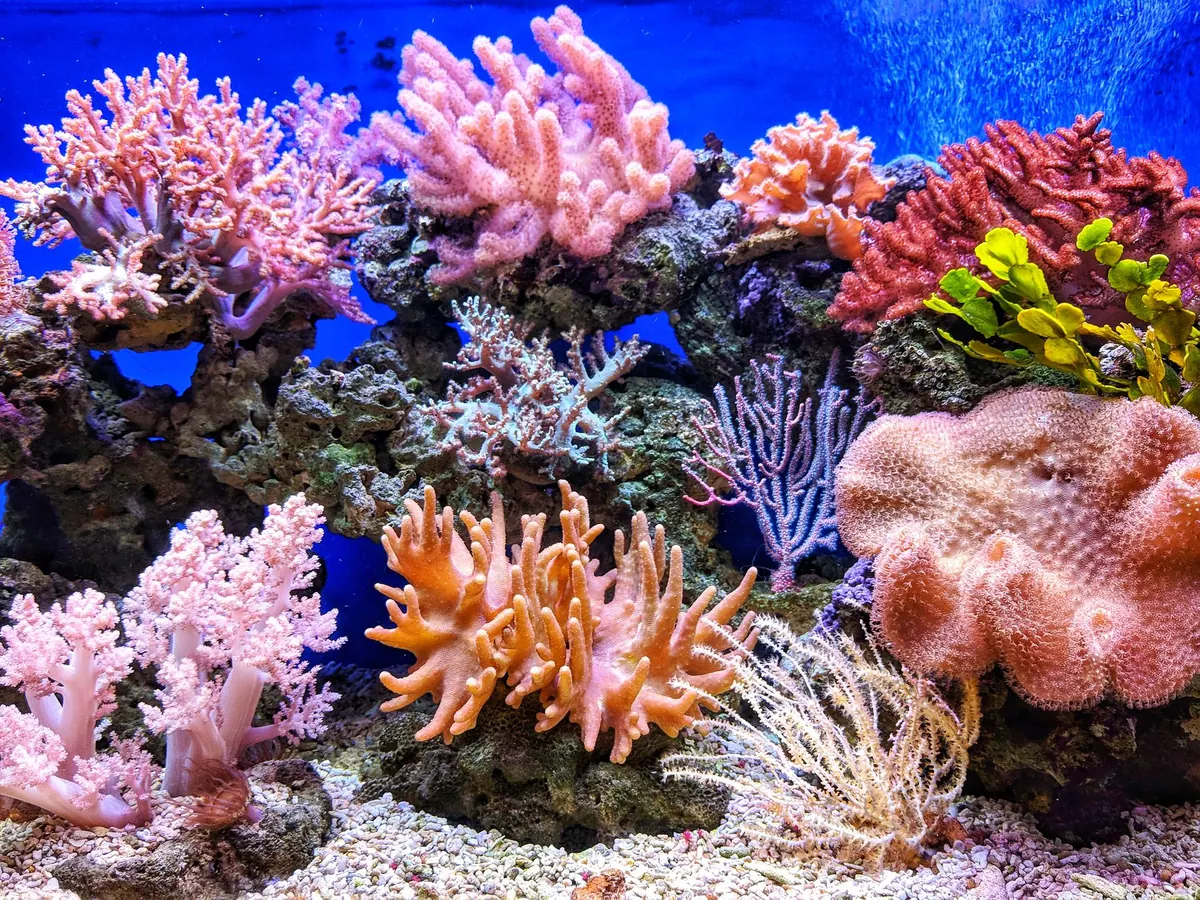
Most marine tanks don't collapse because reefkeeping is impossibly difficult. They struggle because of a handful of early decisions that are easy to get wrong and awkward to undo. The good news is that nearly all of them are avoidable. Slow down, buy a refractometer before you buy a fish, and resist the urge to fill the tank the weekend you set it up, and you'll sidestep most of the heartbreak that pushes new reefkeepers out of the hobby within a year.
Rushing the nitrogen cycle
Nothing in a marine tank works properly until the bacteria that process waste have established themselves. Ammonia from fish waste, uneaten food and decaying matter is converted to nitrite, then to nitrate. In a brand new tank that population doesn't exist yet, so you have to grow it before livestock arrives.
The reliable approach is a fishless cycle. Add a source of ammonia — a pinch of fish food, a proprietary ammonia solution, or well-cured live rock — and test every couple of days. Most cycles take between two and six weeks, and the timeline varies with temperature, surface area and how much live rock you started with. Don't set a date in your head and stock to it.
You're ready for the first fish when:
- Ammonia and nitrite both read zero, consistently, for several days
- Nitrate is present and rising, which shows the final stage is working
- The tank can process a small ammonia dose within roughly 24 hours
- Readings stay stable after that dose rather than bouncing back up
The classic mistakes here are cycling with a hardy fish "to get things going", adding a bacteria starter and stocking the next morning, and treating a single zero nitrite reading on day three as a green light. Keep the lights low or off during the cycle to limit algae, keep the temperature steady, and don't panic at every reading. A diatom film on the glass in week two is normal, not a disaster.
Treating salinity as a rough guess
Salinity is the one parameter you'll measure for the life of the tank, and it's the one most often handled badly at the start. Aim for around 35 parts per thousand, which corresponds to a specific gravity of about 1.025 to 1.026. Measure it with a refractometer that you calibrate with a proper reference solution, not with a swing-arm hydrometer that's been dropped on the floor twice.
Three habits separate a stable tank from a wobbly one:
- Mix saltwater properly. Use RO/DI water, mix to the right salinity, aerate for 12 to 24 hours, and bring it to tank temperature before adding it.
- Top up with fresh water, never salt water. Salt doesn't evaporate. Replacing evaporation with saltwater slowly pushes salinity up, which stresses fish and corals. An auto top-off unit is one of the best early purchases you can make.
- Measure at the same temperature each time. Specific gravity readings shift with temperature, so consistency matters more than chasing a perfect number.
And never pour dry salt into a running tank containing livestock. Mix it outside the system, always.
Choosing the wrong tank size
Small tanks are unforgiving. In a 40-litre nano, a day of evaporation noticeably shifts salinity, a warm afternoon moves the temperature, and one dead snail can send ammonia up. A first tank of roughly 100 to 200 litres gives you enough water volume to absorb small errors while you learn.
Going too big is its own mistake. A 500-litre system needs a skimmer, lighting, a place to store and mix water, and a water change routine you'll actually keep up with. Salt, electricity and replacement equipment add up, and a tank you dread maintaining is a tank that gets neglected. Buy the largest system you can maintain comfortably — the limiting factor is your maintenance routine, not the glass.
Stocking too much, too fast
New reefkeepers tend to buy by colour and personality, which is how a peaceful community plan turns into a year of chasing a damselfish around the rockwork with a net. Before you buy anything, look up its adult size, its diet and its temperament.
- Damsels are cheap, hardy and often aggressive. They're difficult to remove once settled.
- Tangs need serious swimming length; most outgrow a typical beginner tank.
- Mandarins and other dragonets need a mature tank with a healthy population of small crustaceans to graze on.
- Anemones want a stable tank that's been running for many months, plus strong lighting.
- Corals: start with forgiving soft corals — mushrooms, leathers, zoanthids — rather than demanding stony species.
Add one fish at a time and leave two to four weeks between additions so the bacteria can catch up with the extra waste. Quarantine every new arrival in a small bare tank with a heater and filter for several weeks; it's far easier than treating a parasite outbreak in a display full of rock and coral. When you buy, ask the shop to feed the fish in front of you — a fish that eats is a fish worth taking home.
Skipping the unglamorous habits
Nobody gets excited about testing, but it's what keeps a reef stable. Check salinity and temperature regularly, and add alkalinity, calcium and magnesium testing once you keep stony corals. Don't dose anything you can't measure; adding supplements blind is a common way to turn a small problem into a large one.
Change 10 to 20 per cent of the water weekly or fortnightly with pre-mixed, temperature-matched saltwater. Feed small amounts once or twice a day and remove what isn't eaten. Keep a notebook — dates of additions, readings, water changes — because patterns show up in written records that you'd never spot from memory. Buying a cheap test kit and then not using it is worse than not buying it at all.
A realistic first six months
Weeks one to six: cycle the tank with live rock, decide your stock list, set up and run the quarantine tank so it's ready before you need it. Month two: add the first fish and a modest clean-up crew of snails and a few hermits — not a hundred of them, since most will starve. Months three and four: one more fish, then your first soft corals. By month six, if your readings have been steady, you can think about a hardier stony coral.
Write down what you add and when. Test before you buy, not after. And remember that a reef tank rewards patience in a way few hobbies do — the tanks that look effortless are usually the ones that were set up slowly, one careful decision at a time.
Photo: QUI NGUYEN / Pexels